

 Română
 English
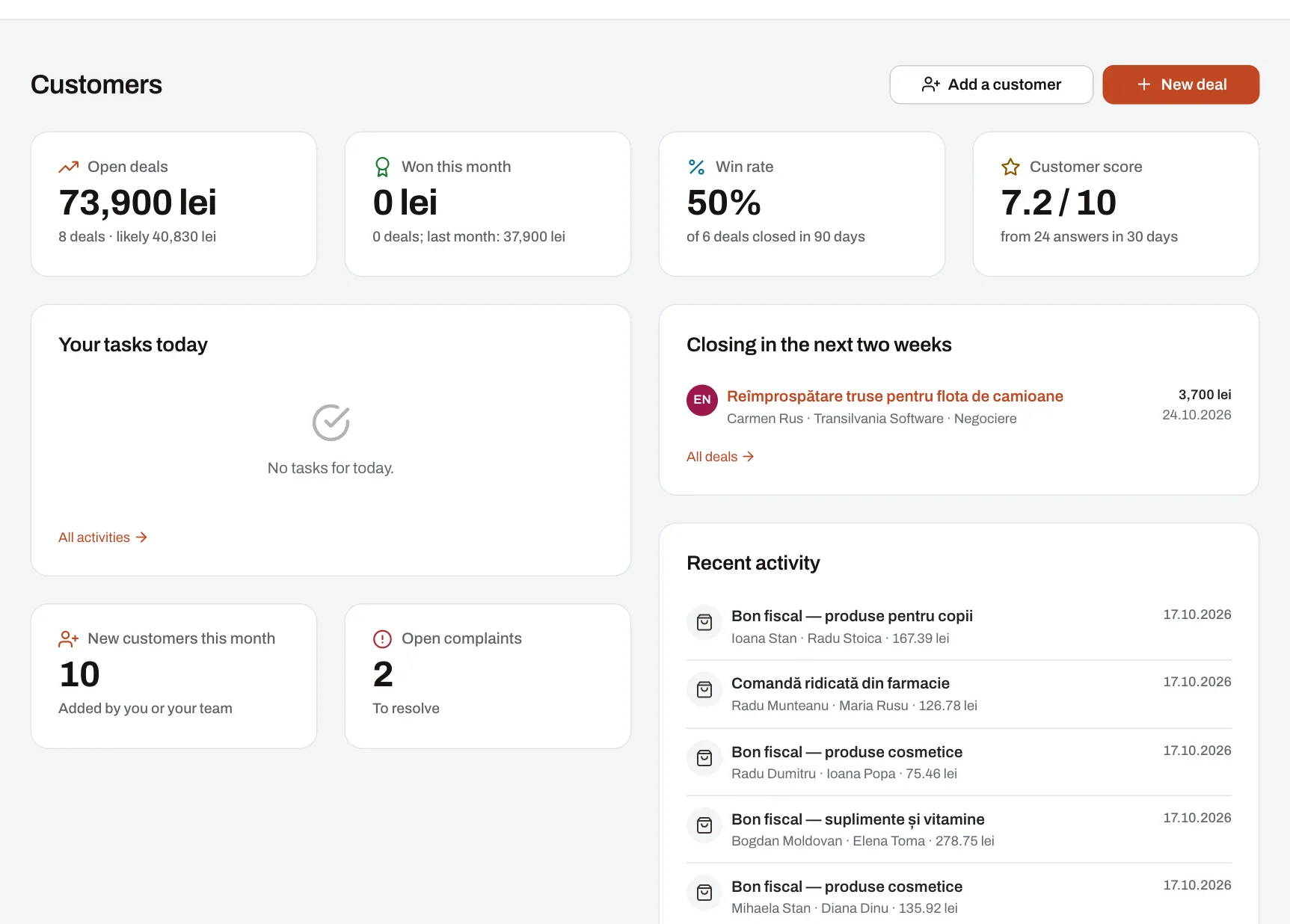
Whether you sell in shops, welcome guests in hotels or sell and let property from agencies, customers belong to the units and the people who serve them. Harmoniq keeps them in the same place as the team: every customer, organisation and deal belongs to a unit and has an owner, and everyone sees exactly what is theirs.
What it covers
- Customers and organisations: the people you serve and the companies you work with, with their source, tags, full history and marketing consent.
- Deals by stage: a sales pipeline in columns where you drag deals along; value, probability, expected close, won and lost (with the reason).
- Activities and the agenda: calls, meetings, visits, emails and tasks with a due date; customers’ purchases with their amount; “My agenda” shows each morning what is due today and what is overdue.
- Feedback and complaints: 0–10 scores and comments, complaints followed until resolved.
- Import from Excel of your existing customers, matched by email or phone.
Everyone sees what is theirs
- An employee: their customers and those of the unit they work in.
- A manager: also the customers of the units and people in their reach.
- Whoever runs the CRM: the whole company, plus the pipelines, the import and customers’ requests about their data.
Tied to performance
CRM figures can feed the KPI scorecards like any other number, per employee, unit or company: deals won and their value, win rate, new customers, activities done, sales to customers, average score and NPS, complaints and time to resolve. In Enterprise you also define your own indicators from CRM data, alongside several sales pipelines.
Customer data done right
- Marketing consent with its source and history.
- A customer’s data exported or erased on request, with the figures kept for reporting.
- Excel reports, and API access (Enterprise) for the rest of your systems.